
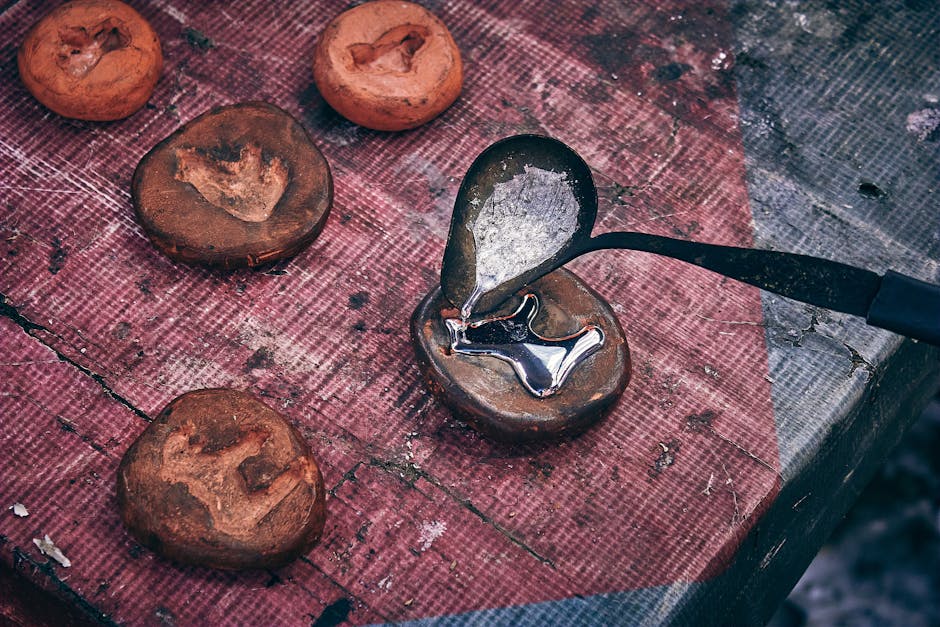
Casting shrinkage is one of the most critical factors that jewelry designers and manufacturers must understand to create precise, high-quality pieces. Whether you're working with gold, silver, or platinum, understanding how metals behave during the casting process can make the difference between a perfect piece and a costly remake.
What is Casting Shrinkage in Jewelry Manufacturing?
Casting shrinkage occurs when molten metal cools and solidifies, causing it to contract and reduce in size. This natural phenomenon affects all metals used in jewelry manufacturing, but the degree of shrinkage varies depending on the metal type, alloy composition, and casting conditions.
For jewelry manufacturers, this means that the final cast piece will be smaller than the original wax model or 3D printed prototype. Failing to account for this shrinkage can result in undersized rings, loose stone settings, or components that don't fit together properly.
Shrinkage Rates for Common Jewelry Metals
Different metals exhibit varying shrinkage rates during casting:
- 14K Gold: Approximately 1.5-1.7% shrinkage
- 18K Gold: Around 1.3-1.5% shrinkage
- Sterling Silver: Typically 1.8-2.1% shrinkage
- Platinum: Generally 1.8-2.0% shrinkage
- Brass: Usually 1.5-1.8% shrinkage
These percentages represent linear shrinkage, meaning a 20mm ring would become approximately 19.7mm after casting in 14K gold.
Factors Affecting Casting Shrinkage in Jewelry Production
Several variables influence the final shrinkage rate in your jewelry manufacturing process:
Metal Composition: Higher copper content typically increases shrinkage, while adding palladium or nickel can reduce it. Working with an experienced jewelry manufacturing partner helps ensure consistent alloy compositions.
Casting Temperature: Pouring metal at extremely high temperatures can increase shrinkage. Optimal pouring temperatures minimize both shrinkage and casting defects.
Cooling Rate: Rapid cooling can create uneven shrinkage, leading to warping or cracking. Controlled cooling environments produce more predictable results.
Design Complexity: Thick sections shrink more than thin ones, and complex geometries may experience uneven shrinkage patterns.
Compensating for Shrinkage in CAD Design
Modern jewelry CAD software allows designers to compensate for casting shrinkage before production begins. Here's how professional jewelry manufacturers approach this:
Scale Up CAD Models: Increase your digital design by the expected shrinkage percentage. If working with 14K gold (1.6% shrinkage), scale your model to 101.6% of the desired final size.
Non-Uniform Scaling: Consider that different parts of your design may shrink differently. Rings typically require more compensation in diameter than in height.
Critical Dimensions: Pay special attention to stone settings, screw threads, and connecting surfaces where precise dimensions are crucial.
Working with Your Jewelry Manufacturing Partner
Successful shrinkage compensation requires close collaboration between designers and manufacturers. At JewelCAD Design Ltd, we maintain detailed shrinkage data for different metals and casting conditions, ensuring consistent results across production runs.
"Understanding your manufacturer's specific shrinkage rates is more valuable than relying on industry averages. Every foundry has unique conditions that affect final dimensions."
When selecting a jewelry manufacturing workshop, ask about their shrinkage compensation procedures, quality control measures, and whether they provide test castings for critical projects.
Quality Control and Final Considerations
Implementing proper shrinkage compensation in your jewelry manufacturing workflow reduces production delays, minimizes remakes, and ensures customer satisfaction. Regular measurement and documentation of cast pieces help refine shrinkage calculations over time.
Remember that casting shrinkage is just one factor in achieving dimensional accuracy. Stone setting, polishing, and finishing operations can also affect final dimensions, making it essential to work with experienced jewelry manufacturers who understand the complete production process.