
Taking the First Step Toward Manufacturing Partnership
So you have a jewelry brand concept, a sketchbook full of designs, and a vision for what your collection could become — but no idea how working with a jewelry factory actually unfolds. You're not alone. For independent designers and emerging retail brands, the manufacturing process can feel like a black box. At JewelCAD Design Ltd, we work with clients at every stage of this journey, and we're here to pull back the curtain on what a professional jewelry manufacturing partnership truly looks like.
Step 1: The Design Consultation
Every great piece of jewelry begins with a conversation. When you first approach a reputable jewelry manufacturer in Bangkok, expect an initial consultation where your ideas, sketches, or reference images are discussed in detail. This is where your concept meets technical reality. A skilled production team will ask questions about metal type (sterling silver, gold karat, brass), stone preferences, intended market price point, and production volume.
This stage sets the foundation for everything that follows. Be as specific as possible — bring mood boards, competitor examples, or even rough hand-drawn sketches. The more context you provide, the more accurately the team can guide your design toward something both beautiful and manufacturable.
Step 2: CAD Design and 3D Modeling
Once your concept is confirmed, the design moves into CAD (Computer-Aided Design) development. Professional jewelry CAD software like JewelCAD or RhinoGold allows designers to render precise, photorealistic 3D models of your piece. This is one of the most critical stages when working with a custom jewelry manufacturer, because it allows you to see and approve your design before any physical material is committed.
Expect to go through one to three rounds of revisions before the CAD file is finalized. This is completely normal — minor adjustments to proportions, prong placement, or surface texture are far easier to fix digitally than after casting. Always ask to receive a rendered image or video of your CAD model for approval.
Step 3: 3D Printing and Sample Production
After CAD approval, a wax or resin prototype is printed using high-resolution 3D printing technology. This physical sample gives you a tangible representation of your design at 1:1 scale. Hold it, examine it under light, and compare it against your original vision.
"A 3D-printed prototype is your last opportunity to request structural changes before metal casting begins. Use it wisely."
If adjustments are needed, now is the time to communicate them clearly. Once you're satisfied with the sample, you'll provide written approval to proceed to casting.
Step 4: Casting and Metal Production
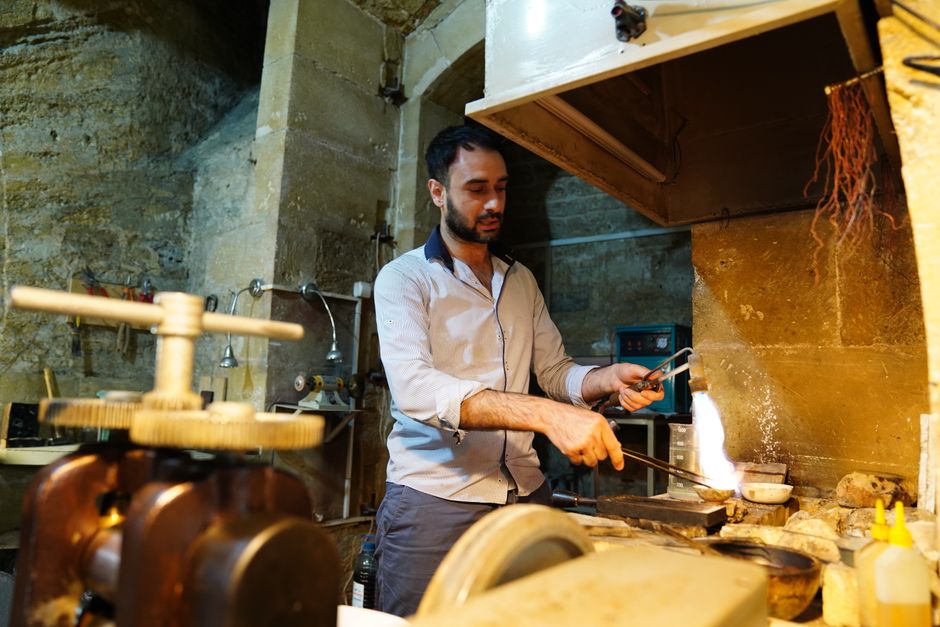
The approved wax prototype is used in a lost-wax casting process — a centuries-old technique refined with modern precision. Molten metal is injected into a ceramic mold created from your wax model, resulting in a raw metal casting of your design. This rough piece then undergoes filing, sanding, polishing, and stone setting by skilled bench jewelers.
For production orders (also called batch manufacturing or wholesale jewelry production), multiple wax models can be attached to a single casting tree, dramatically reducing per-unit costs and production time.
Step 5: Quality Control and Delivery
Before any piece leaves a professional jewelry workshop, it should pass through a dedicated quality control process. At JewelCAD Design Ltd, each item is inspected for surface finish, stone security, weight consistency, and dimensional accuracy. Expect your manufacturer to provide photos of completed pieces before final shipment — especially important for international clients ordering jewelry production from Thailand.
- Request a quality inspection report for bulk orders
- Confirm packaging requirements in advance
- Discuss hallmarking or branding stamp options early in the process
- Clarify lead times before placing production orders
Building a Long-Term Manufacturing Relationship
The most successful jewelry brands treat their manufacturing partner as a collaborator, not just a vendor. Open communication, realistic timelines, and mutual respect for craft all contribute to better outcomes — and better jewelry. Whether you're placing your first sample order or scaling an existing collection, understanding each stage of the jewelry production process puts you in a far stronger position to make informed decisions and build a brand that lasts.
Ready to bring your designs to life? Contact JewelCAD Design Ltd in Bangkok to discuss your next project.